Gìn giữ tinh hoa nghề chạm bạc H’Mông
Preserving the Quintessence of H’Mông Silversmithing — Lao Xa, Sủng Là, Hà Giang
Nghề chạm bạc của người Mông ở Lao Xa, Sủng Là, Hà Giang — bản Lao Xa là cái nôi của nghề chạm bạc truyền thống của người Mông trên Cao nguyên đá Đồng Văn. Bộ ảnh ghi lại những công đoạn chế tác và chân dung người nghệ nhân giữ lửa nghề qua nhiều thế hệ. Ảnh: Nguyễn Sơn Tùng, 2024.
Bản Lao Xa, xã Sủng Là nằm trên sườn núi đá cao, cách trung tâm xã khoảng 5 km, với 103 hộ người Mông sinh sống. Nơi đây được coi là cái nôi của nghề chạm bạc truyền thống của người Mông trên Cao nguyên đá Đồng Văn (Hà Giang). Từ lâu, mỗi khi muốn đặt một món trang sức bạc ưng ý, người dân trong vùng — không chỉ riêng người Mông — đều tìm đường lên Lao Xa.
Gia đình nghệ nhân Mua Sè Sính (hơn 70 tuổi) là địa chỉ nổi tiếng nhất. Ông thừa hưởng nghề truyền thống của gia đình từ nhỏ, gắn bó với nghề hơn 50 năm, nay truyền dạy tinh hoa nghề làm bạc cho con cháu. Đồ trang sức bạc của ông nổi tiếng với nét chạm khắc độc đáo, tinh xảo; người dân khắp vùng tin tưởng đặt hàng, nhiều du khách trong và ngoài nước tìm đến mua nhẫn, lắc tay, lắc chân, vòng cổ.
Quy trình chế tác gồm rất nhiều công đoạn: khò nung chảy bạc, đổ khuôn, chế tác hình dạng trên đe, chạm khắc hoa văn, đánh bóng. Bộ dụng cụ của người thợ gồm bễ thổi, khuôn đúc, đe, các loại búa, kìm và bộ đục chạm hoa văn, họa tiết truyền thống.
Trước kia, mọi công đoạn đều làm thủ công; ngày nay, một số khâu đã được máy móc như máy cán hỗ trợ, giúp tiết kiệm thời gian, công sức. Nghề chạm bạc đòi hỏi người thợ khéo léo, tỉ mỉ, kiên trì — phải phấn đấu rất nhiều năm mới đạt đến kỹ thuật tinh hoa của nghề bạc thôn Lao Xa.
Với người Mông, trang sức bạc không chỉ để làm đẹp, thể hiện sự giàu sang trong những dịp lễ, Tết mà còn được coi là vật bảo vệ sức khỏe, mang lại hạnh phúc; là của hồi môn cha mẹ tặng con gái khi về nhà chồng. Với quan niệm giữ nghề, nghề chạm bạc ở Lao Xa chỉ được truyền dạy cho con cháu trong nhà — nhờ đó, tinh hoa nghề được gìn giữ, tiếp nối qua nhiều thế hệ.
English version
Lao Xa village in Sủng Là commune lies high on the rocky mountainside, about 5 km from the commune center, home to 103 Mông households. It is regarded as the cradle of traditional Mông silversmithing on the Đồng Văn Karst Plateau (Hà Giang). For a long time, whenever locals — Mông or otherwise — have wanted a fine piece of silver jewelry, they have made their way up to Lao Xa.
The family of artisan Mua Sè Sính (over 70) is the most renowned address. He inherited the family craft as a child, has devoted more than 50 years to it, and now passes its quintessence on to his children and grandchildren. His silver jewelry is celebrated for its unique, exquisite engraving; people across the region trust him with their orders, and many domestic and foreign tourists come to buy rings, bracelets, anklets and necklaces.
The crafting process involves many steps: melting the silver with a torch, casting, shaping on the anvil, engraving patterns, and polishing. The artisan’s toolkit includes the bellows, molds, anvil, hammers, pliers and chisels for traditional motifs.
Every step was once done by hand; today, machines such as rolling mills assist in some stages, saving time and effort. Silversmithing demands dexterity, meticulousness and perseverance — it takes many years of striving to reach the pinnacle of Lao Xa’s silversmithing art.
For the Mông, silver jewelry is not only adornment expressing prosperity at festivals and Tet, but also a guardian of health and bringer of happiness; it is the dowry parents give their daughters when they marry. With the belief in keeping the craft within the family, silversmithing in Lao Xa is taught only to one’s own children and grandchildren — and so its quintessence is preserved through generations.
This photo series was selected for print publication in the article “The Silversmithing Craft of the Mông in Lao Xa,” photographed by Nguyễn Sơn Tùng.
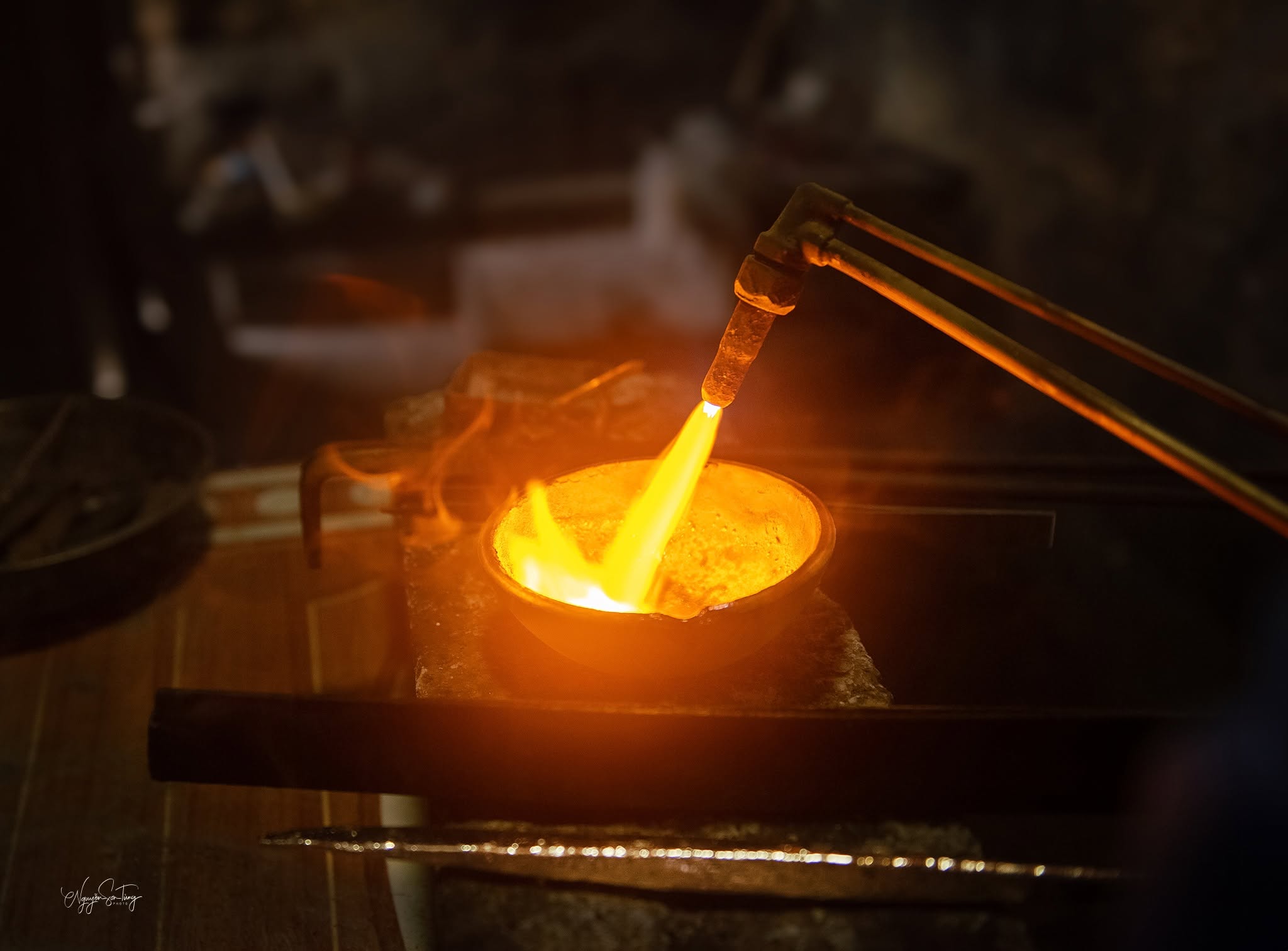
Melting silver with the torch — the first step in crafting jewelry.
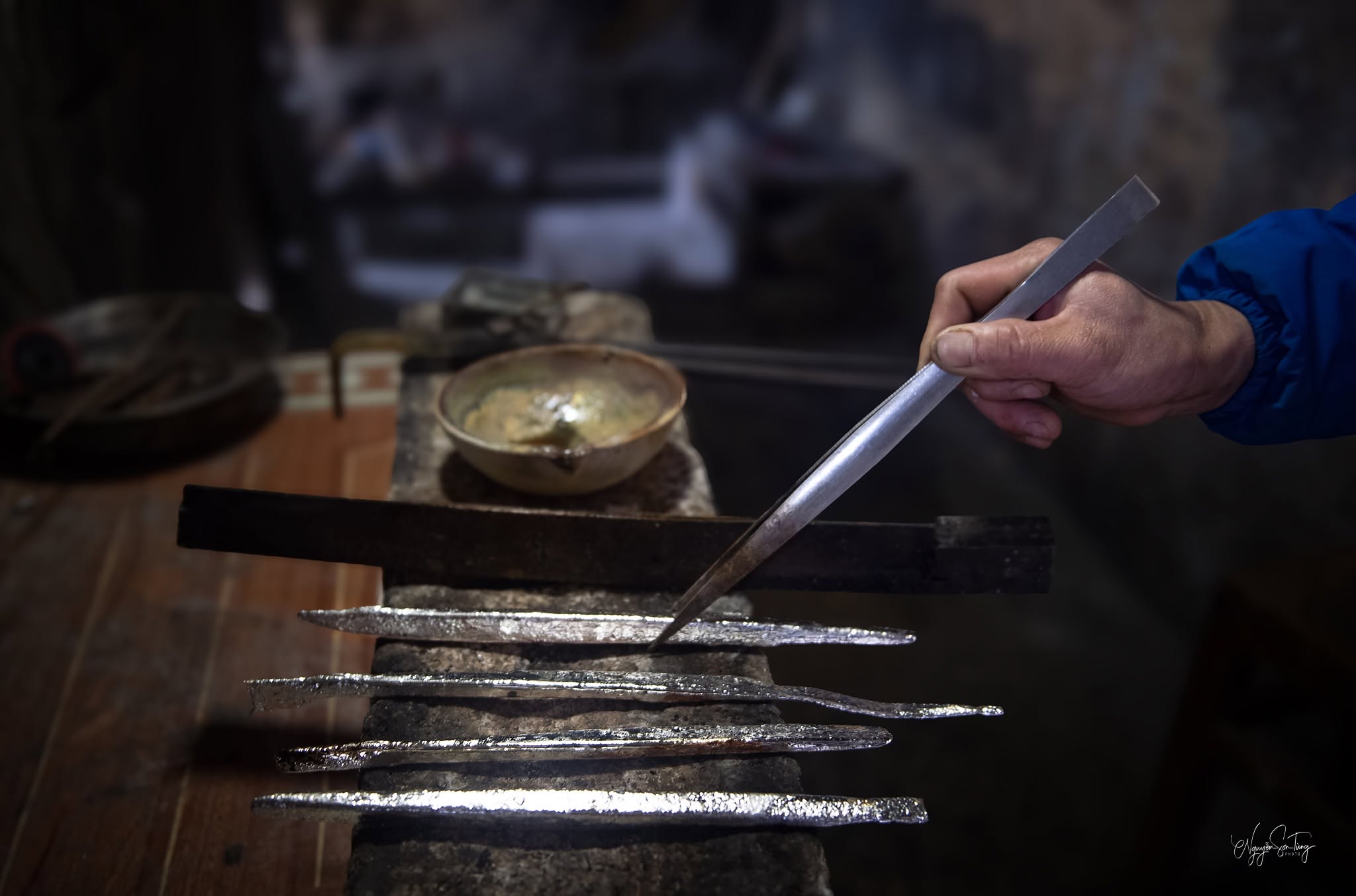
Engraving tools for traditional Mông silver motifs.
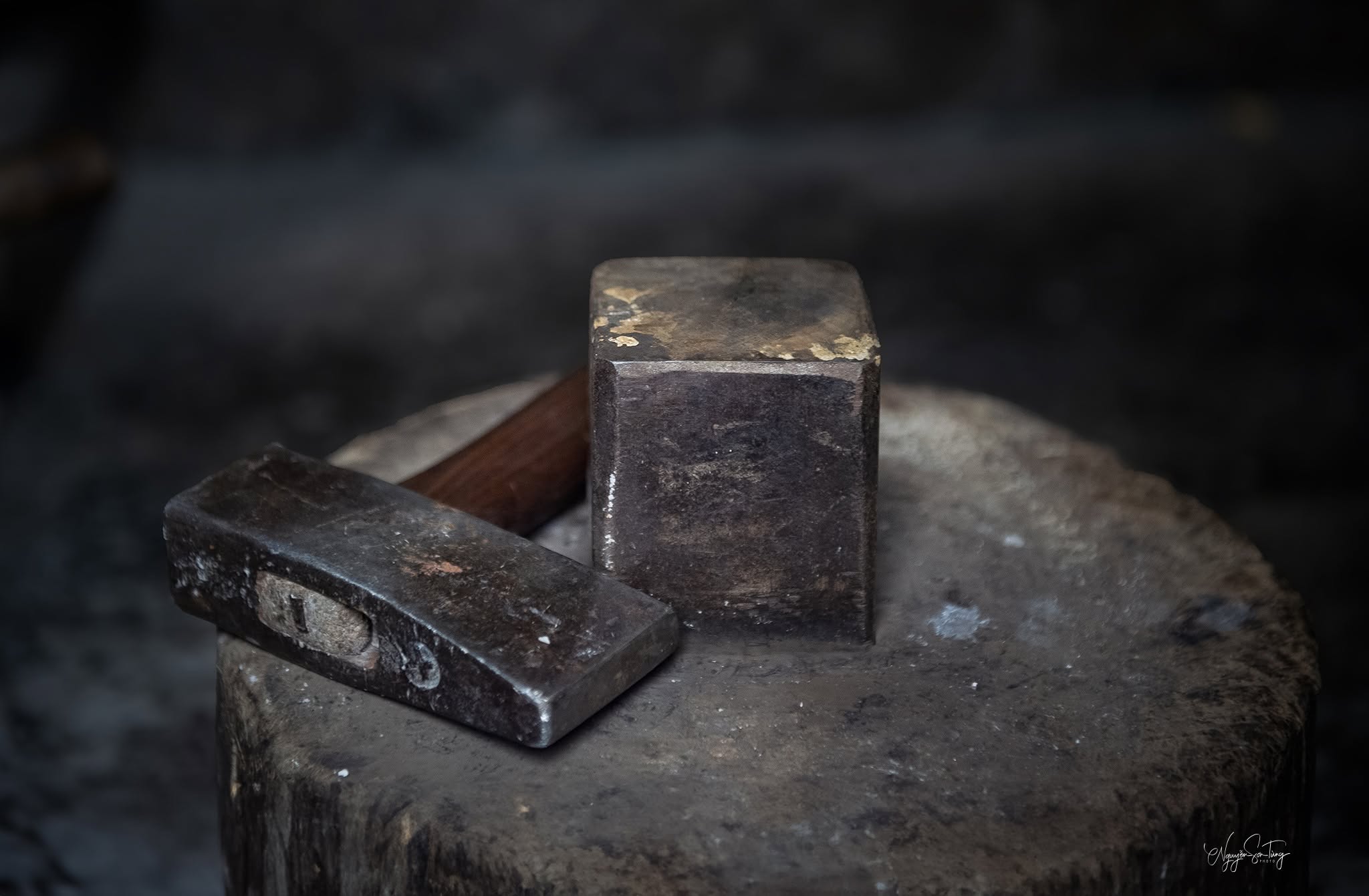
Hammer and anvil — the humble, faithful tools of the silversmith.
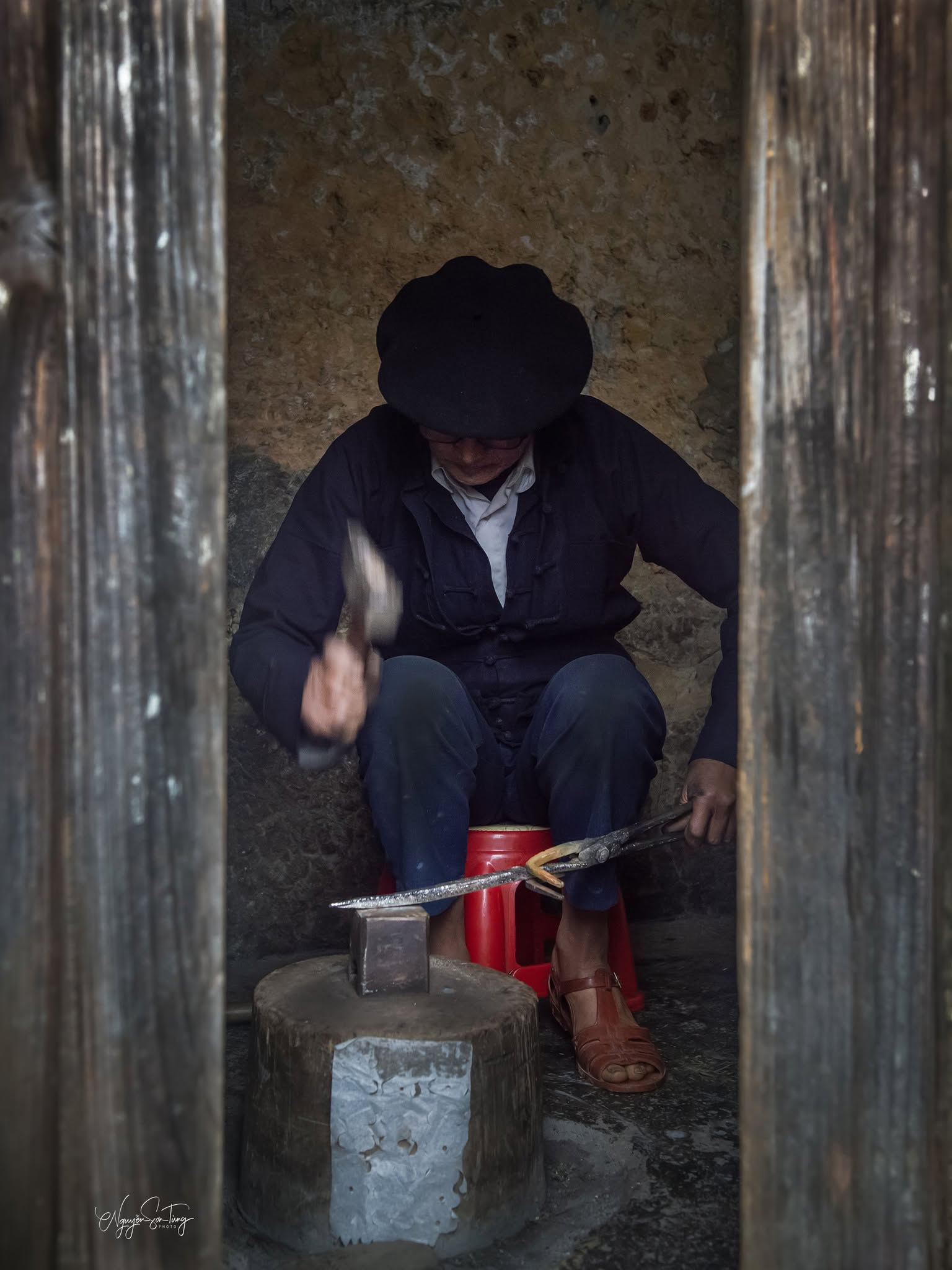
Artisan Mua Sè Sính (over 70) forging silver on the anvil. Having inherited the family craft since childhood, he now passes its quintessence on to his children and grandchildren.
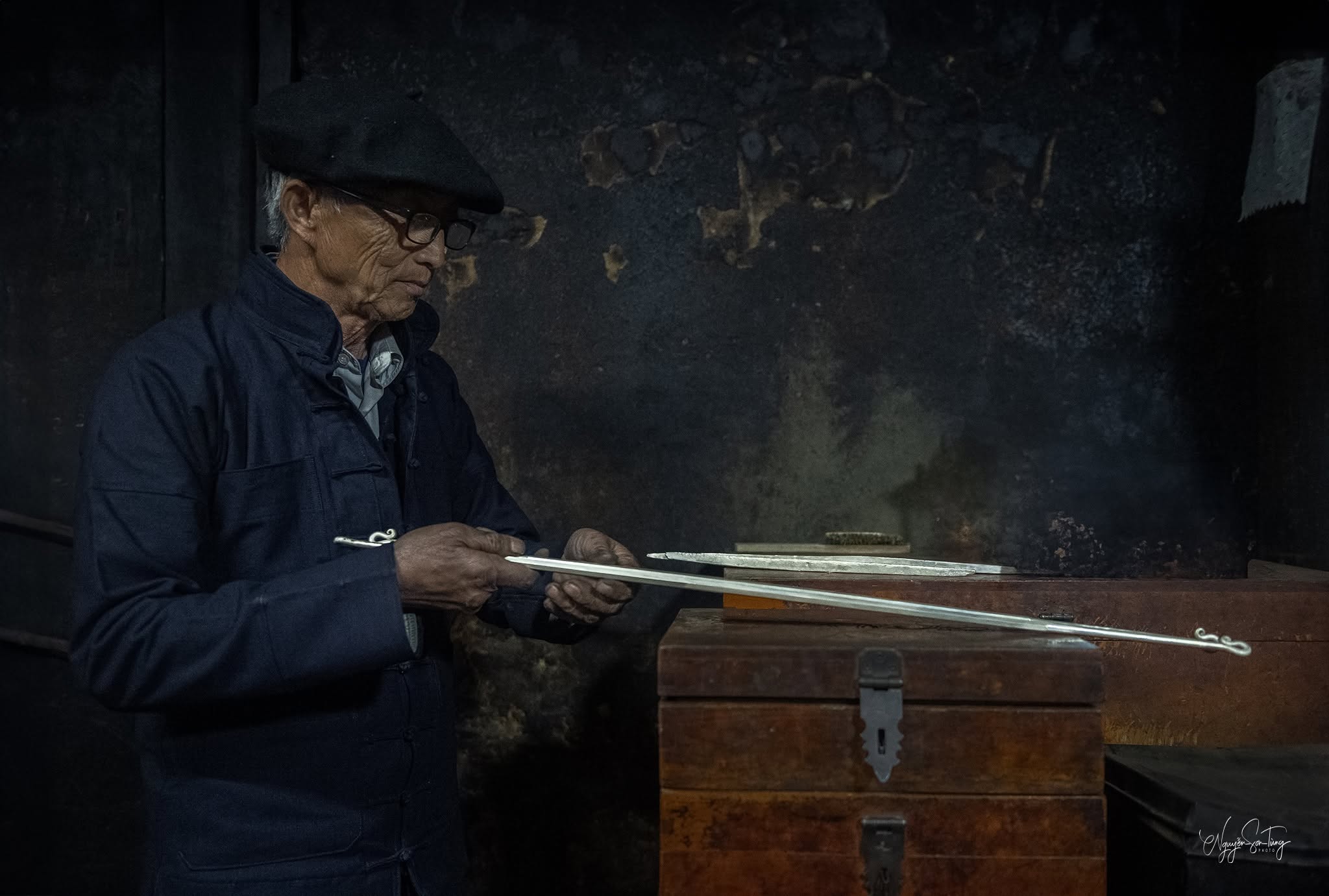
Lao Xa village, about 5 km from Sủng Là commune center, sits high on the rocky mountainside with 103 Mông households — where Mua Sè Sính’s family keeps the traditional silversmithing alive.
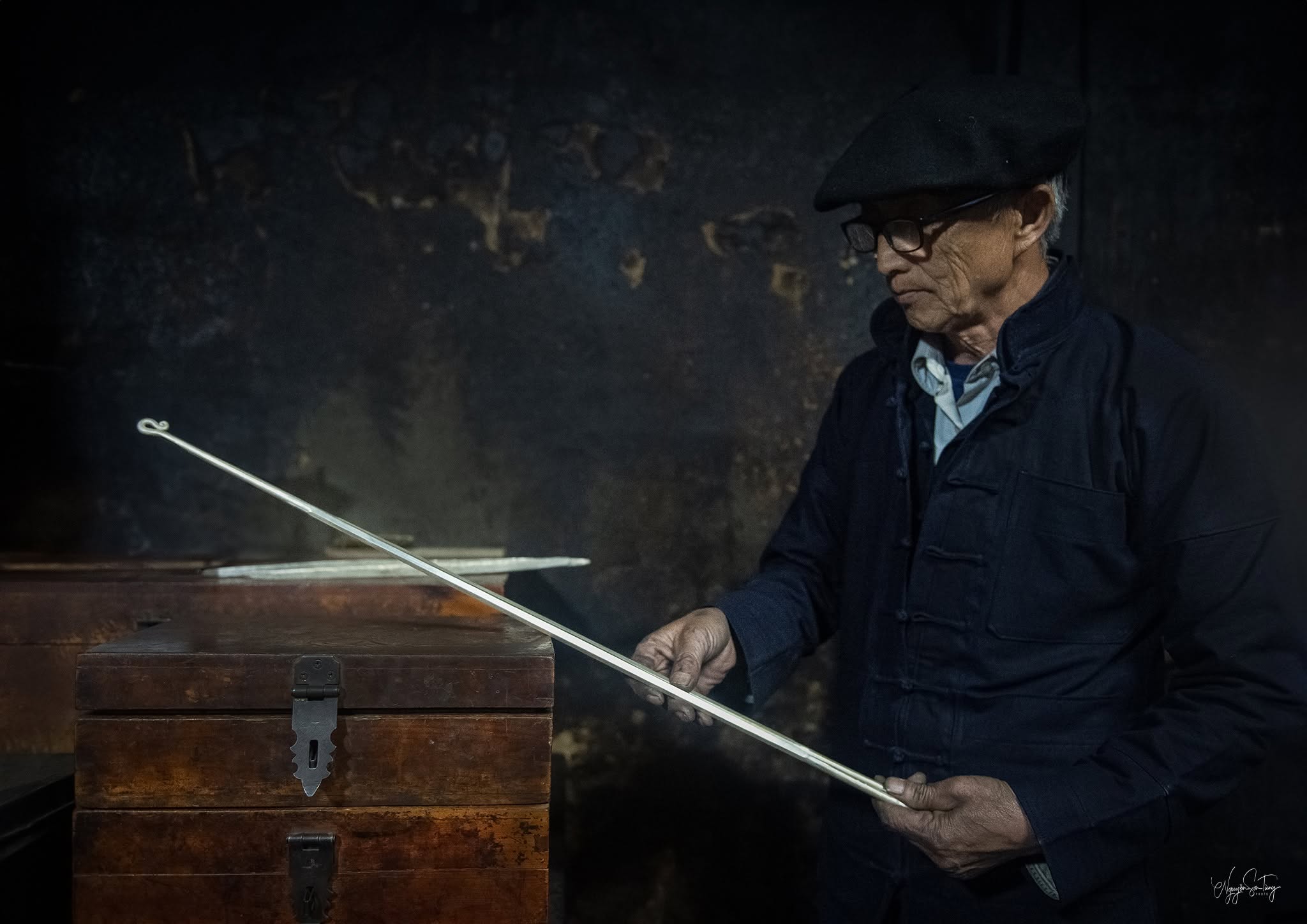
His silverwork is trusted across the region; many domestic and foreign visitors come to buy rings, bracelets, anklets and necklaces.
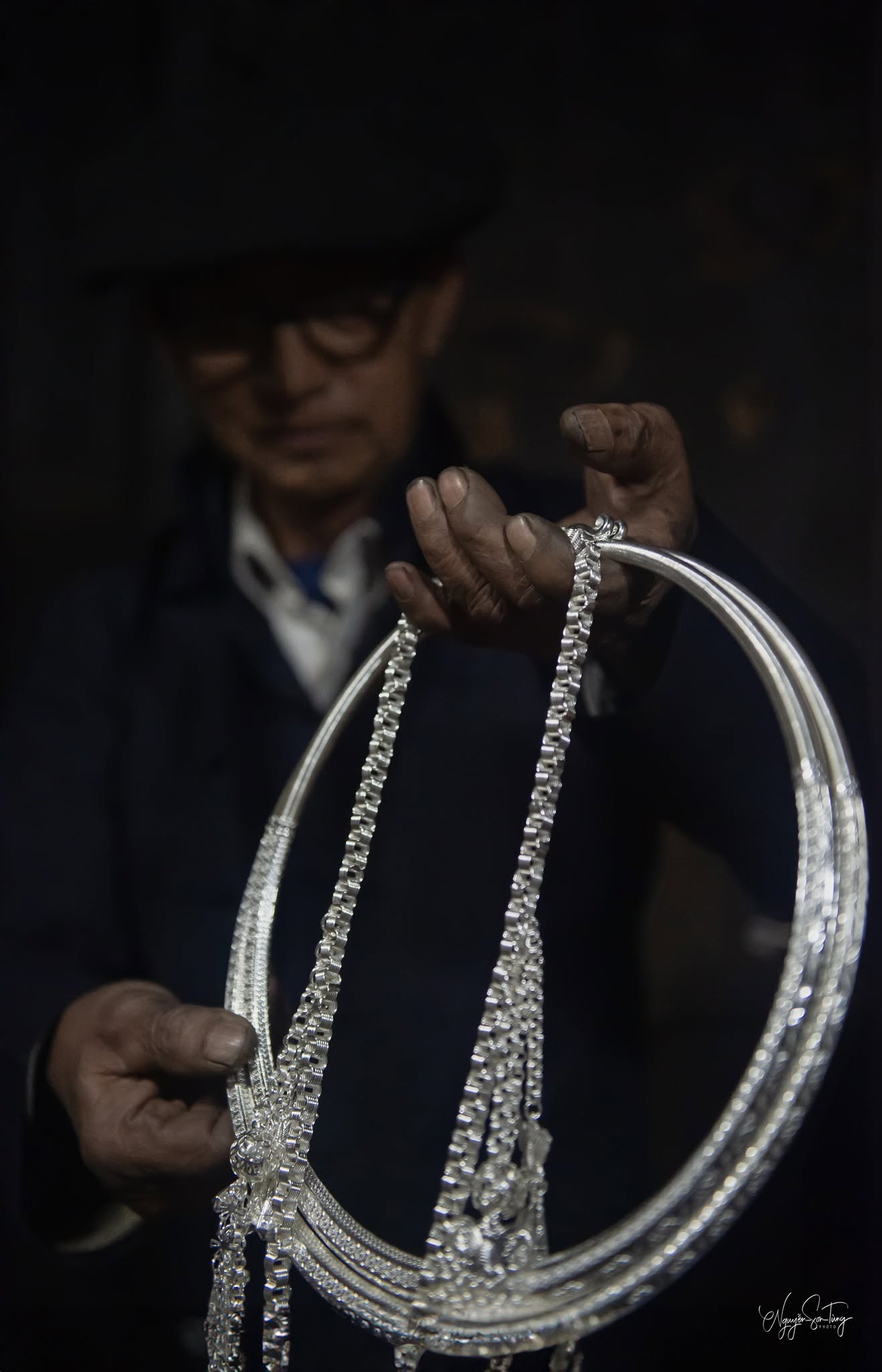
Silver bangles crafted by Mr. Sính — exquisite and beautiful.
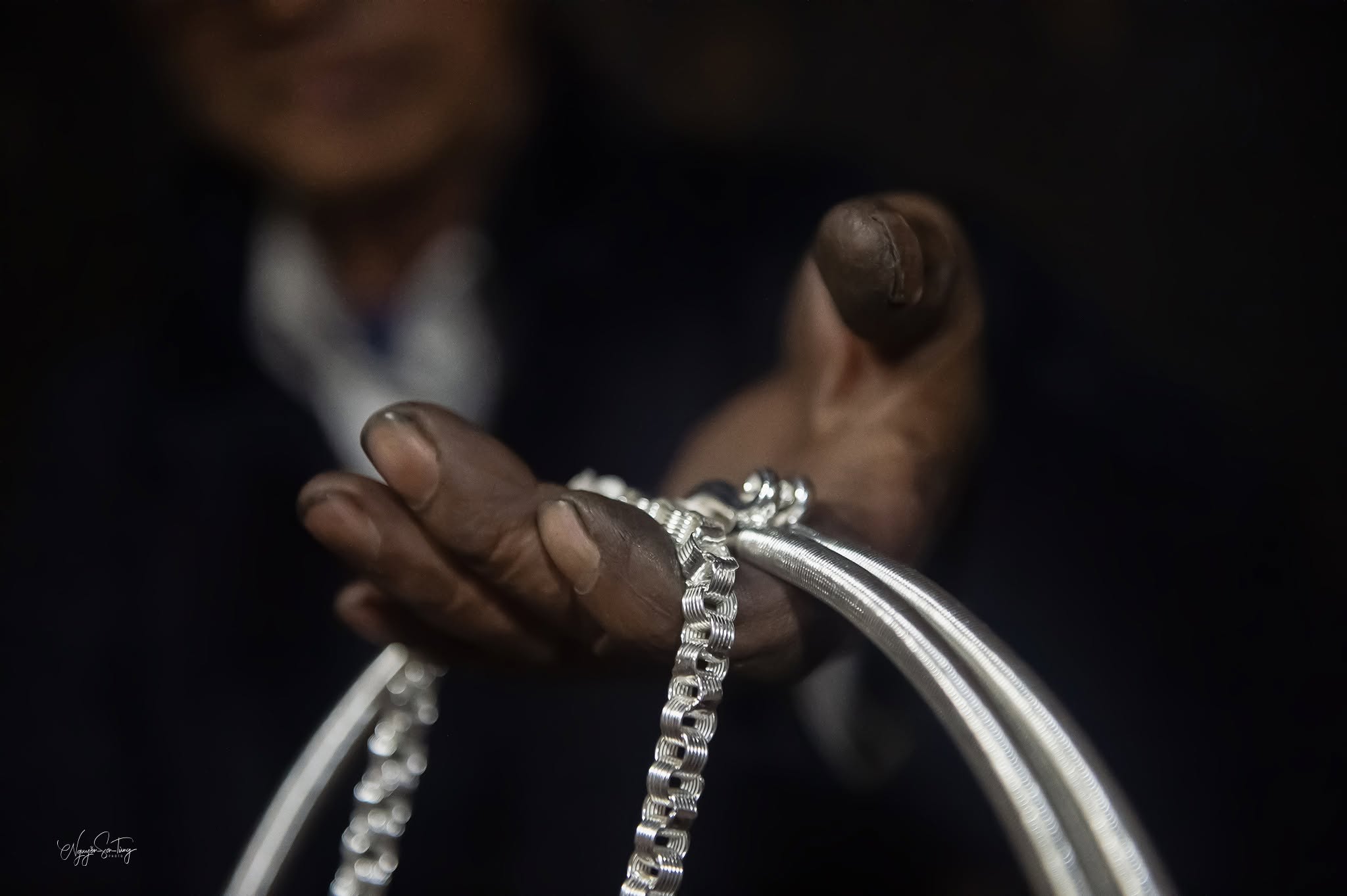
An exquisite jewelry set handcrafted by the artisan.
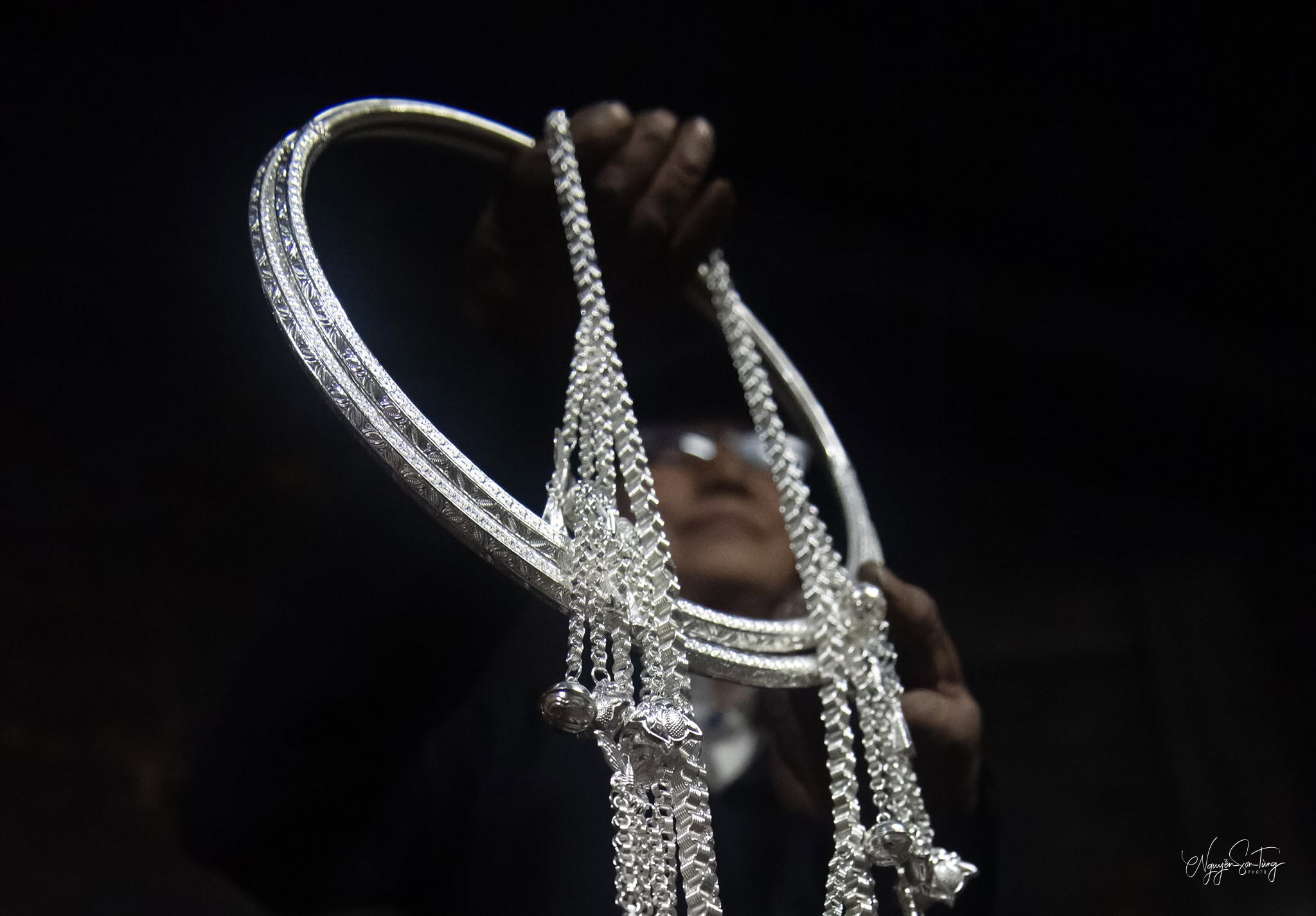
Finely engraved silver necklaces with braided chains and silver bells.
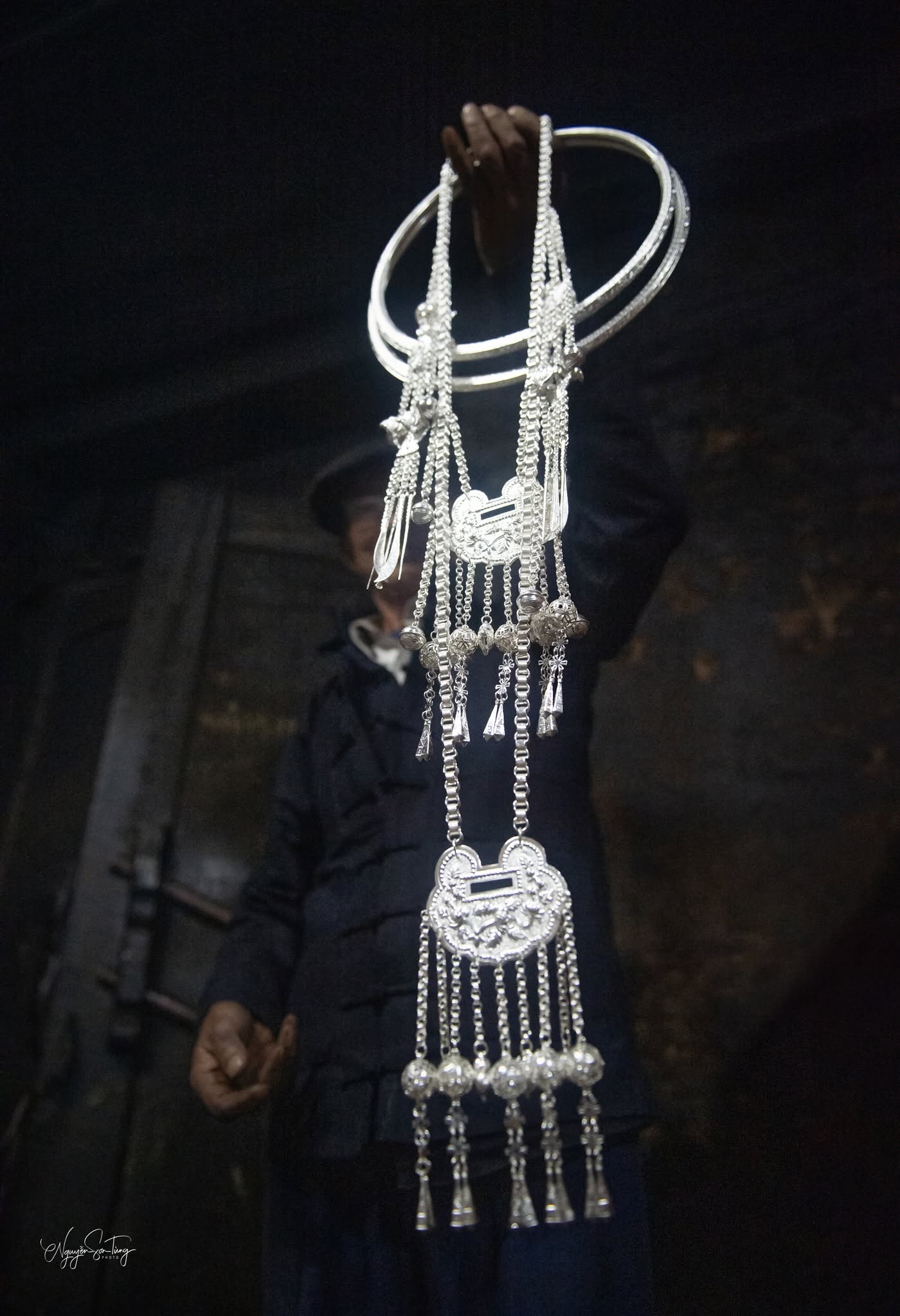
Silver necklaces with long chains, bells and decorative tassels.
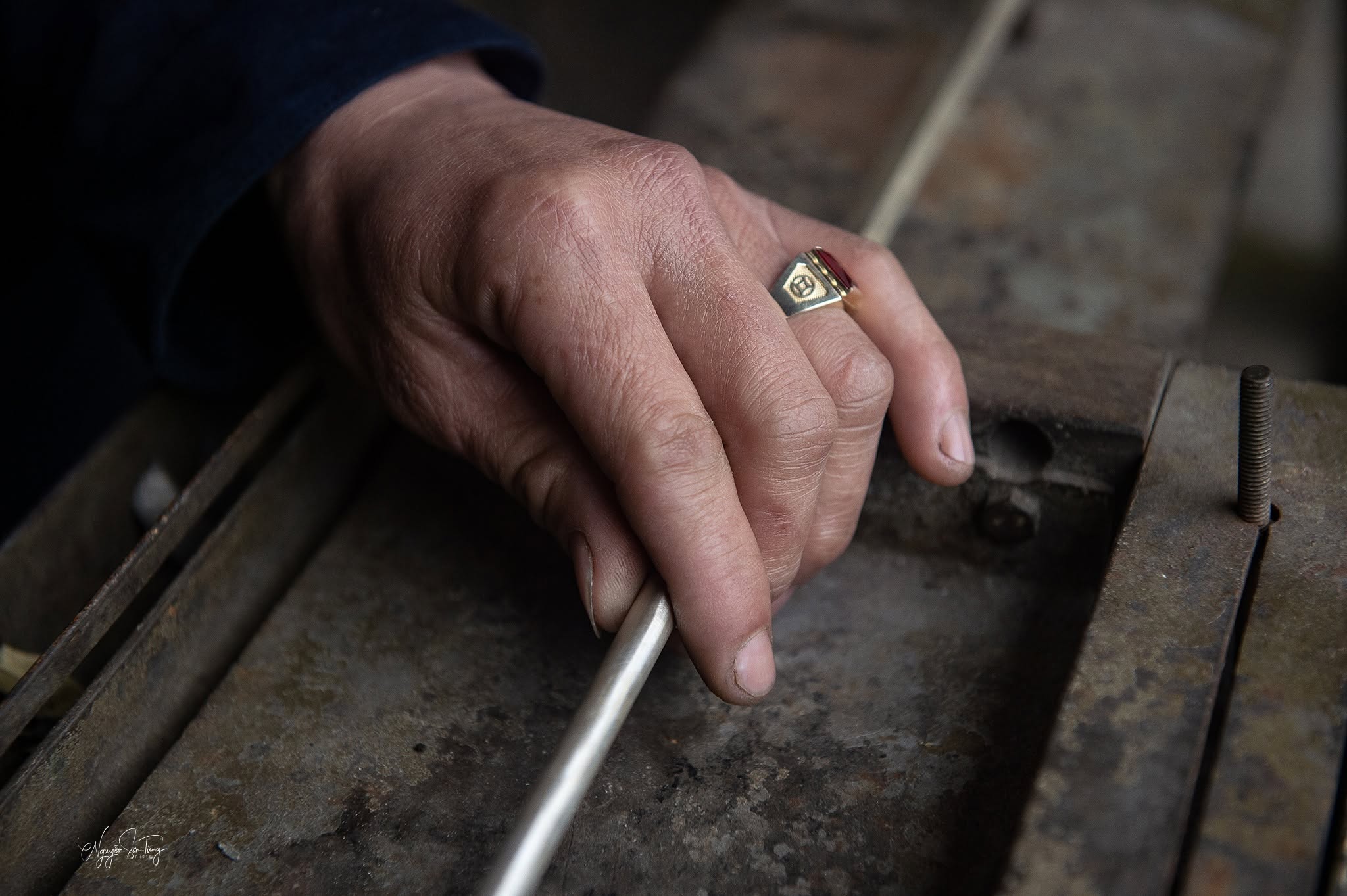
Drawing silver bars through the grooves of a metal die.
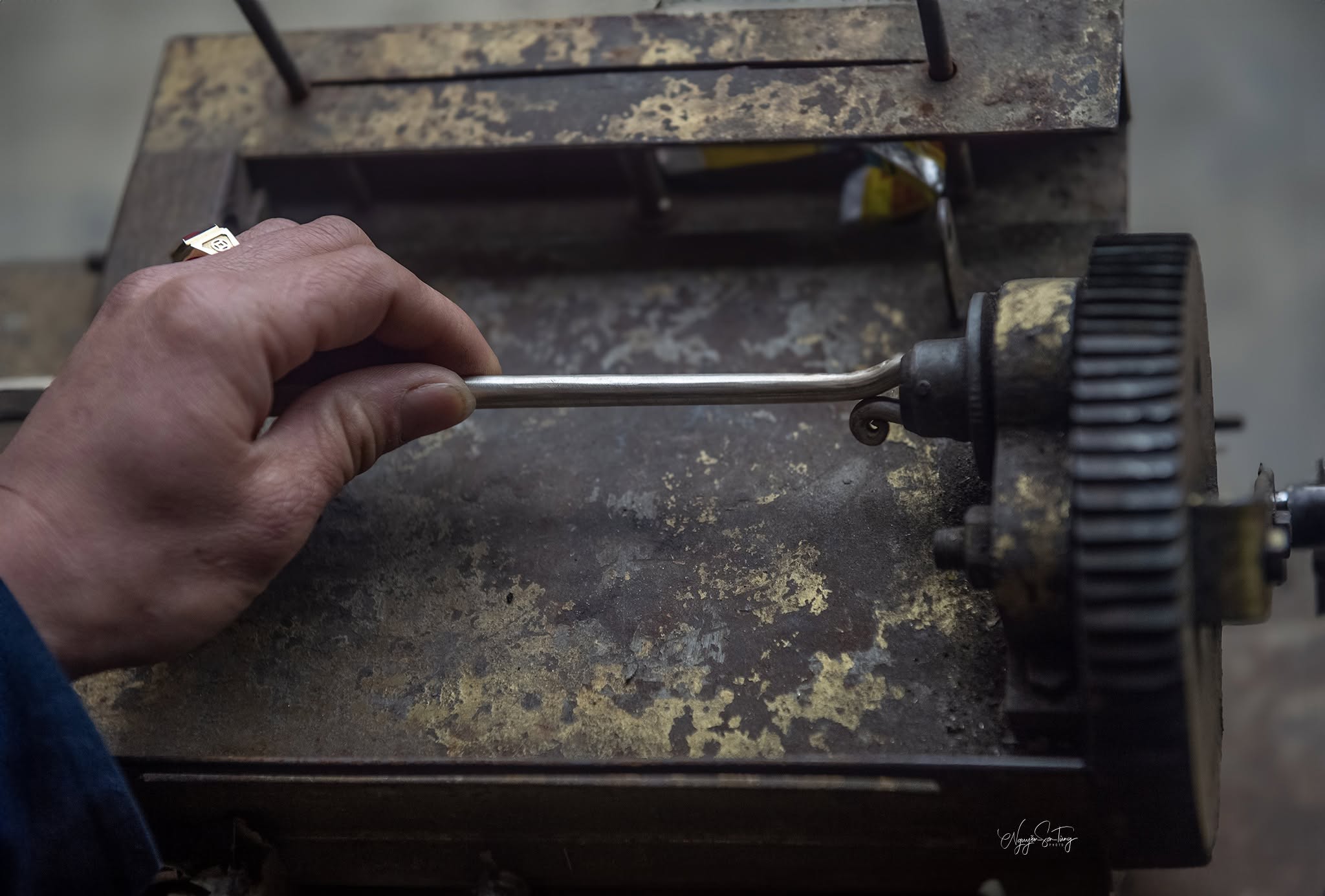
Once purely handmade, the craft is now assisted by machines in several steps.
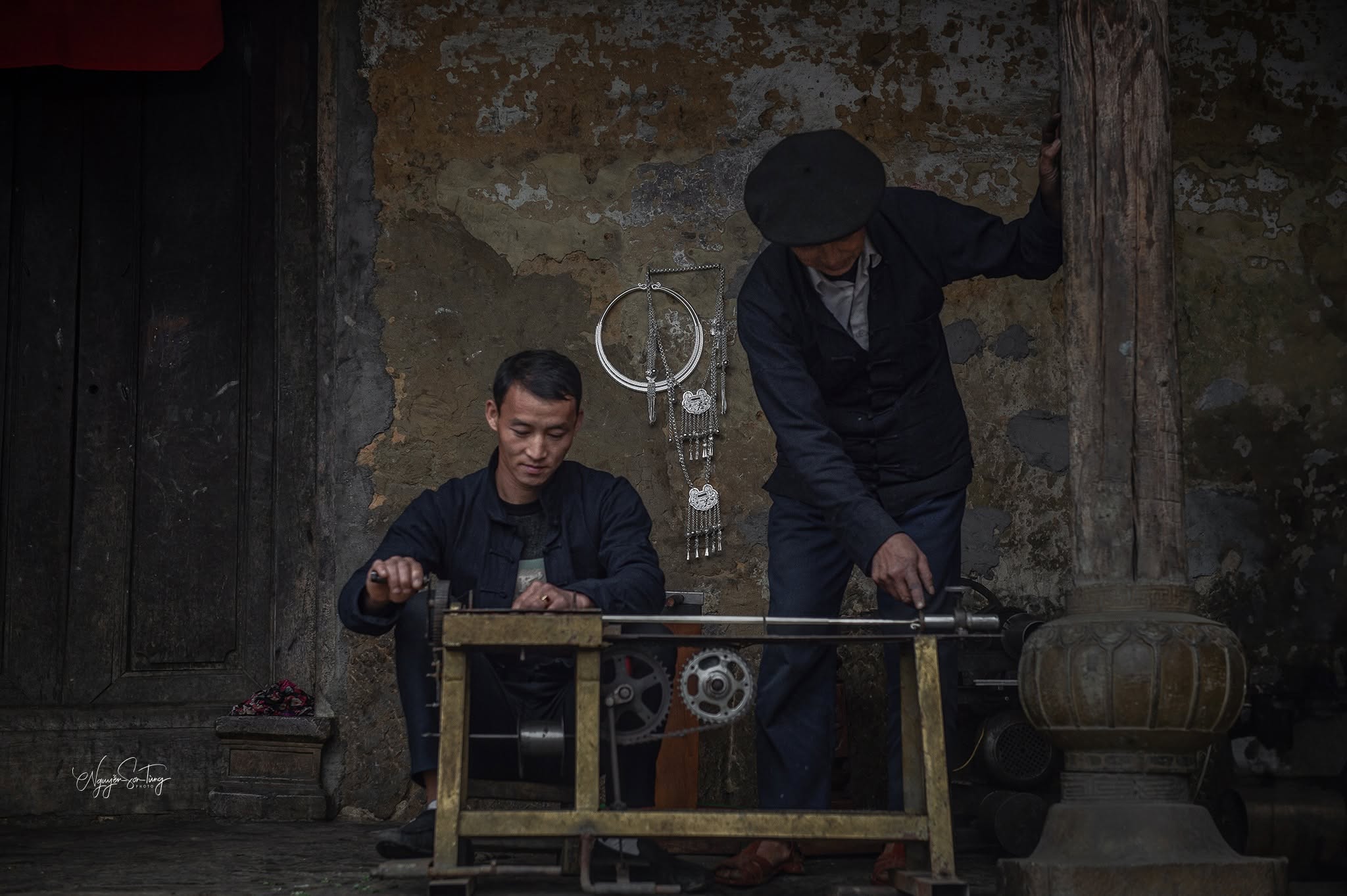
Two craftsmen operating a hand-cranked rolling mill before an old earthen wall.
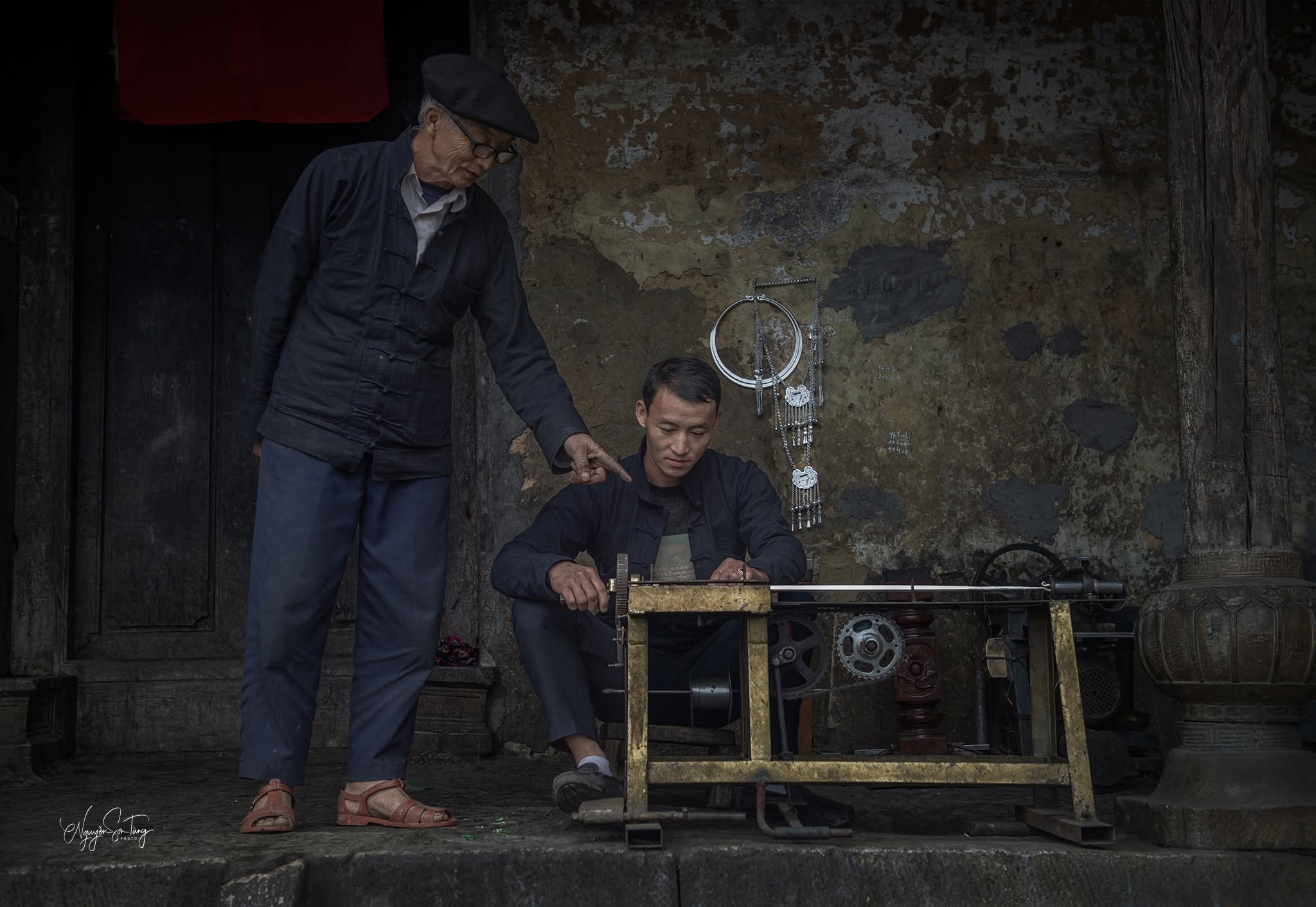
The artisan instructing a young craftsman at the rolling mill.
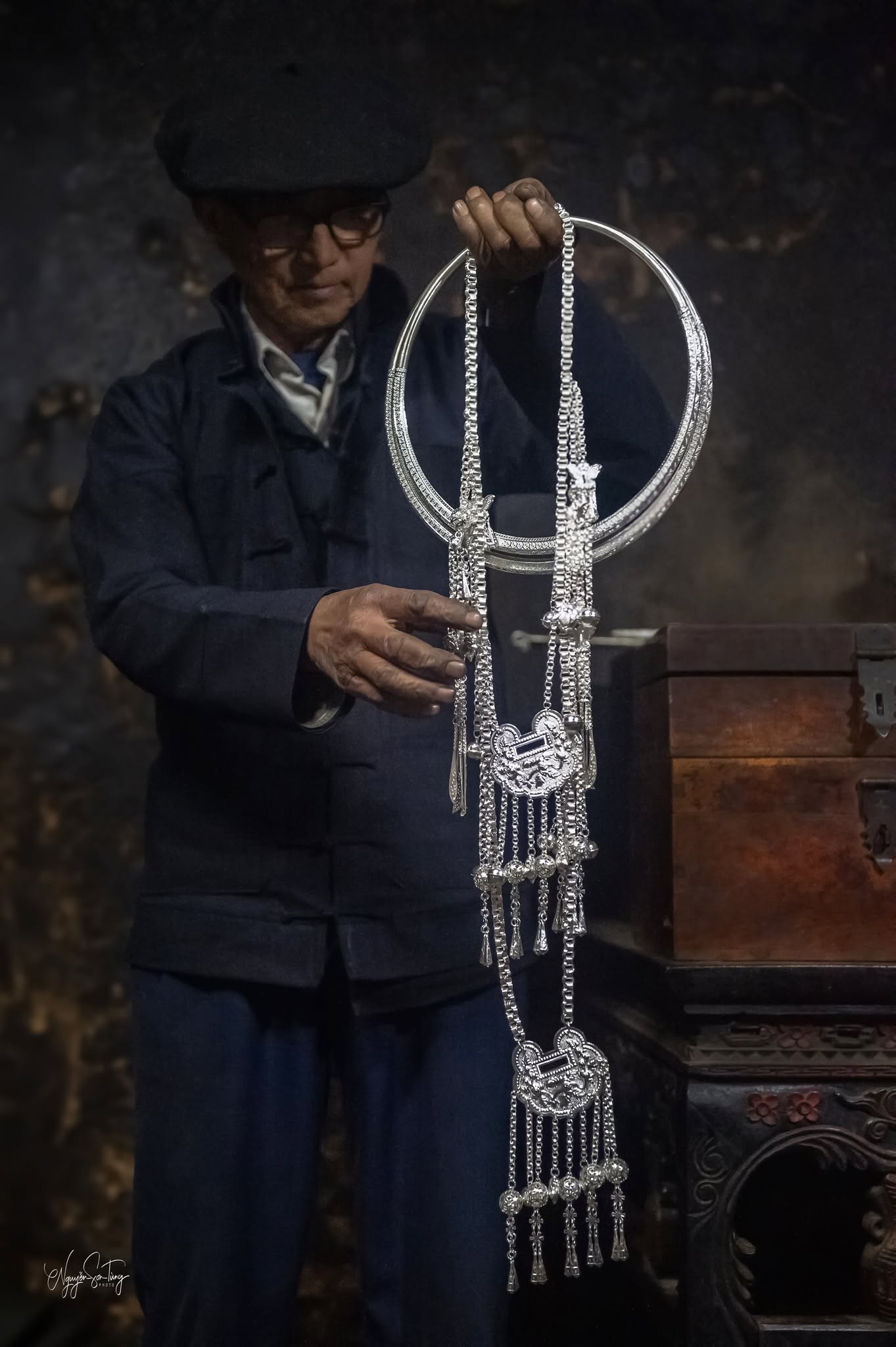
A large silver necklace with long chains, bells and exquisite tassels.
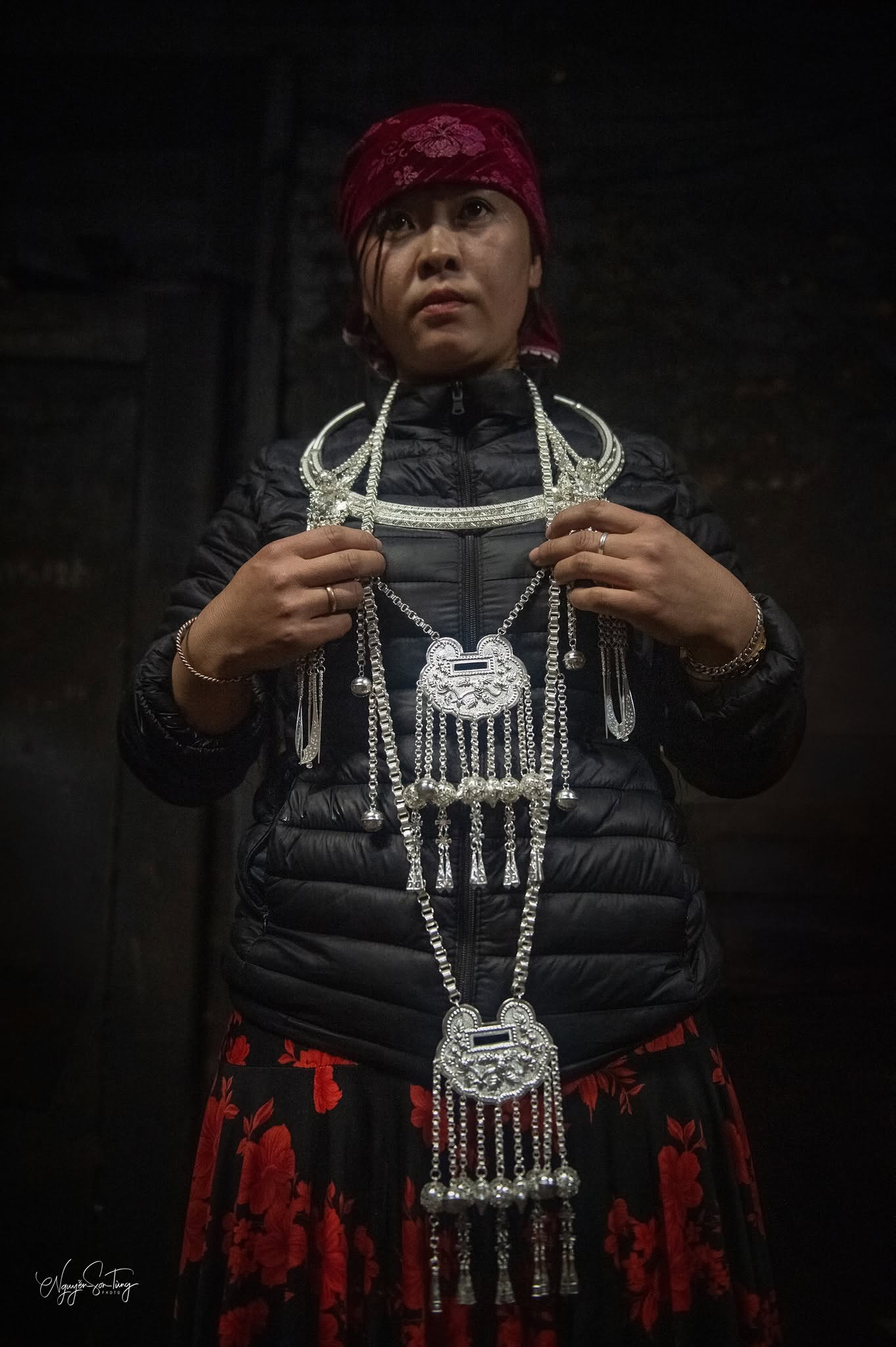
Lao Xa silver jewelry is refined and varied: rings, bracelets, anklets, necklaces. By Mông custom, silver jewelry is worn at festivals and Tet, or given to daughters as dowry when they marry.
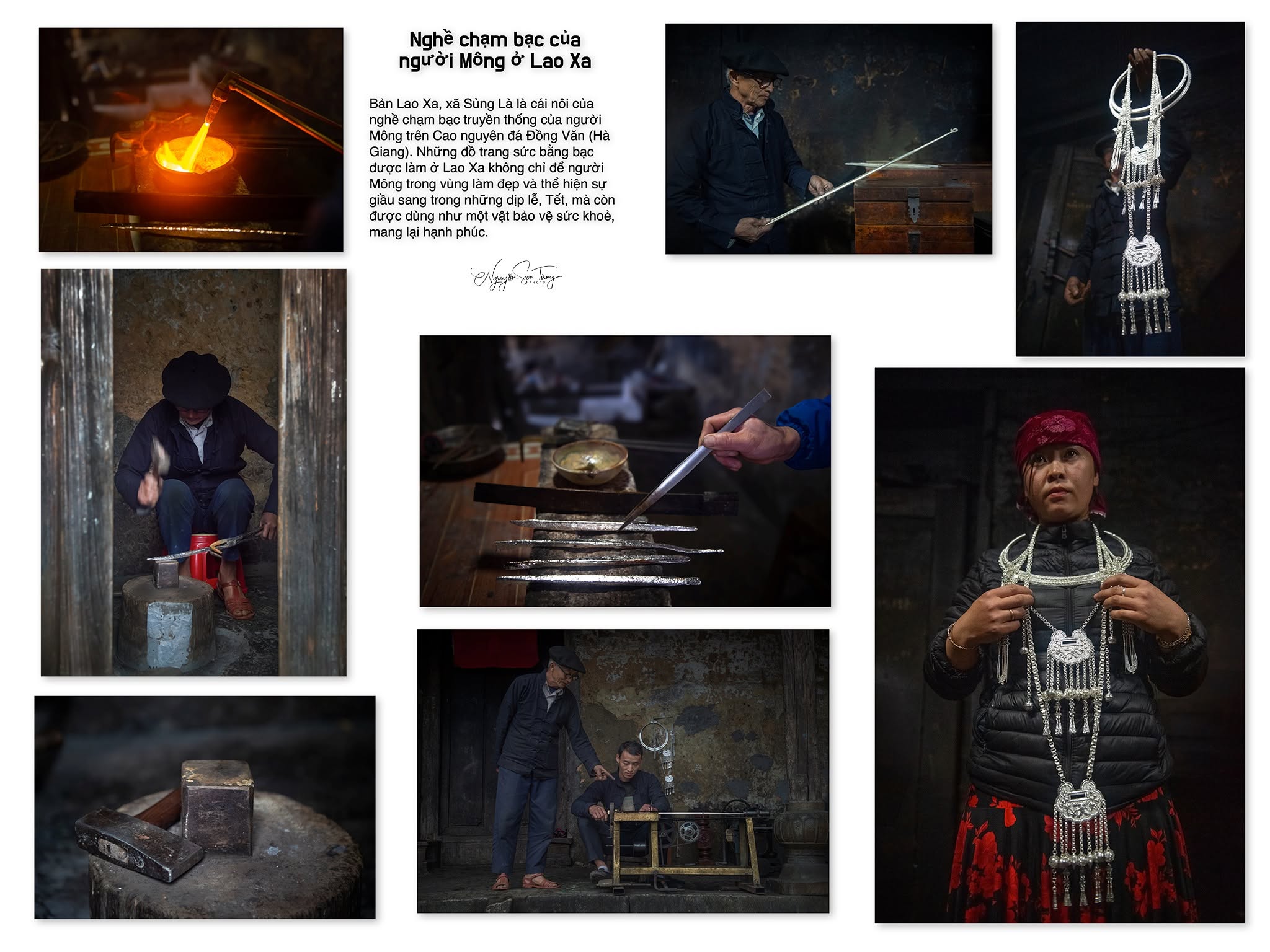
The printed article “The Silversmithing Craft of the Mông in Lao Xa” featuring Nguyễn Sơn Tùng’s photographs (shown unaltered).
Bài báo in: “Nghề chạm bạc của người Mông ở Lao Xa” — Ảnh: Nguyễn Sơn Tùng
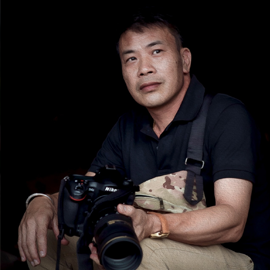
photographer : Nguyễn Sơn Tùng
Photographer | Art Photography
Culture • People • Mountain Life